A to Z today
A daily word game
Year
2026
My Role
Solo builder
Tools Used
Lovable, Posthog
Dev Methodology
Freestyle
Case Study
Context
Personal side project, built and designed solo! www.atoztoday.com
Problem
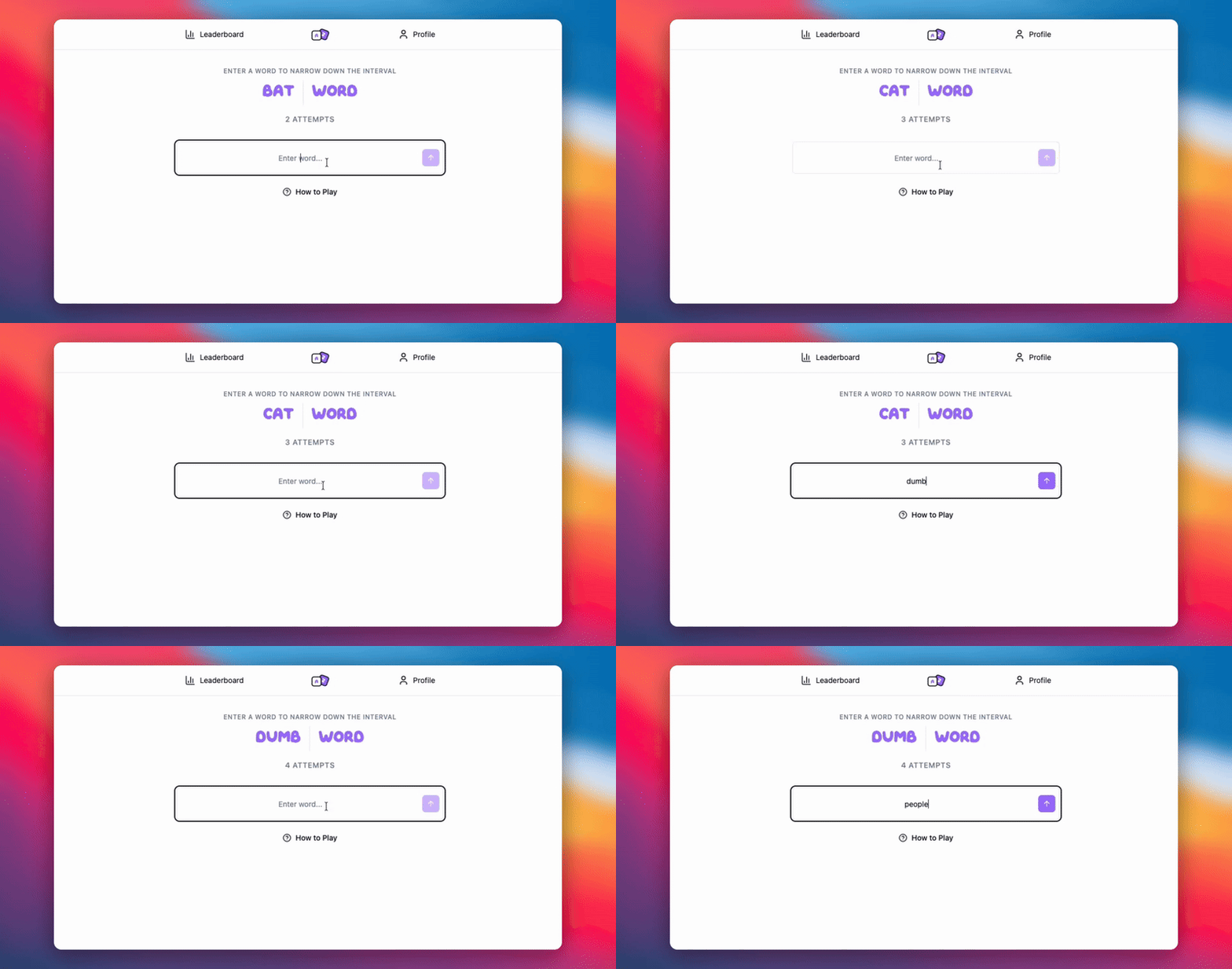
I'm obsessed with daily word games: 400+ Parle matches and counting. I wanted to experiment with new tools and build something from scratch, end-to-end. The result is A to Z Today: a daily word game where you guess the word by narrowing down the alphabetical range.
No brief, no PM, no handoff. Just a product idea and the question of how far I could take it alone.
Process
I used Lovable for vibe-coding the experience. Supabase handled auth, database, and storage. It was a deliberate exercise in using today's tools to compress the gap between idea and working product.
The first version shipped fast and rough. The moment I shared it, feedback came in immediately. This became the real design brief.
The Onboarding was the first thing that needed fixing. People were confused before they even started playing. I added clearer instructions, a GIF showing the core interaction, and a persistent "how to play" link. You should be puzzled by the word, not by the game.
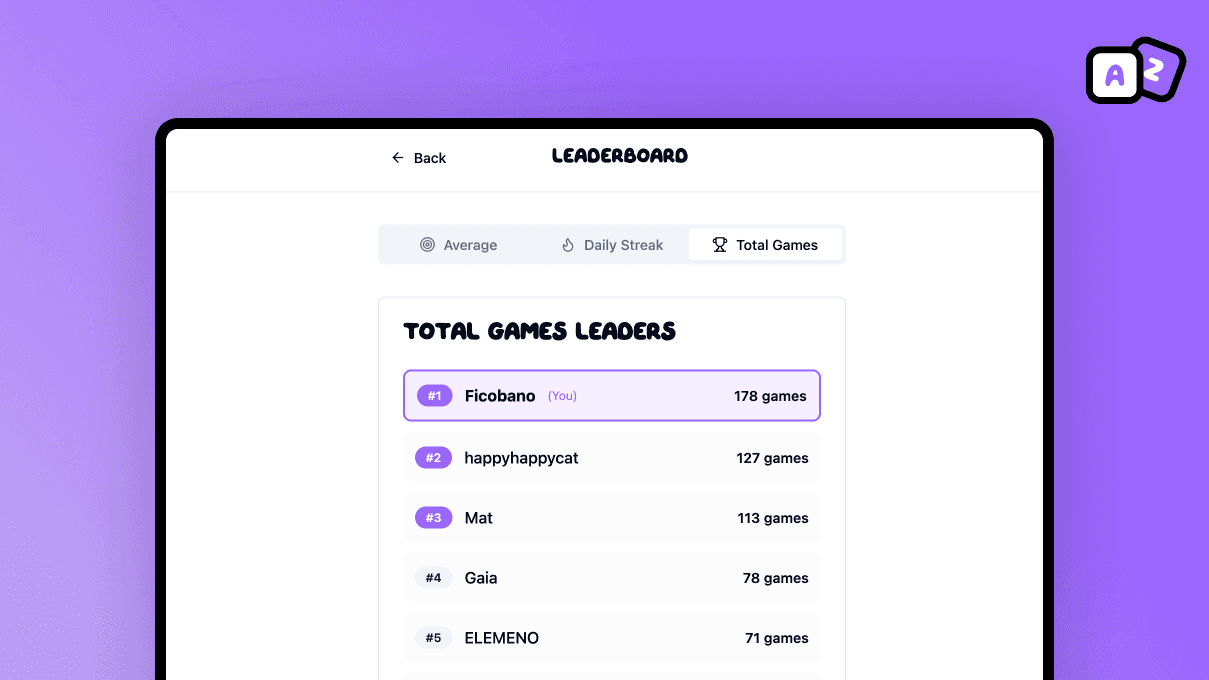
The leaderboard started hidden: my instinct was to use it to gate signups. I quickly reconsidered. A visible leaderboard motivates people to earn their place on it. One user hit a 124-day streak (wow!). That's the kind of engagement a hidden leaderboard would have killed.
The dictionary broke early. In fact, the free API I relied on got blocked. I rebuilt it with my own dictionary. Better performance, no external dependency. Painful lesson, but a satisfying fix.
Sharing went from a copy-to-clipboard shortcut to a proper social sharing feature. Word of mouth turned out to be the real growth driver, so making sharing feel intentional and rewarding mattered more than I originally thought.
Outcome
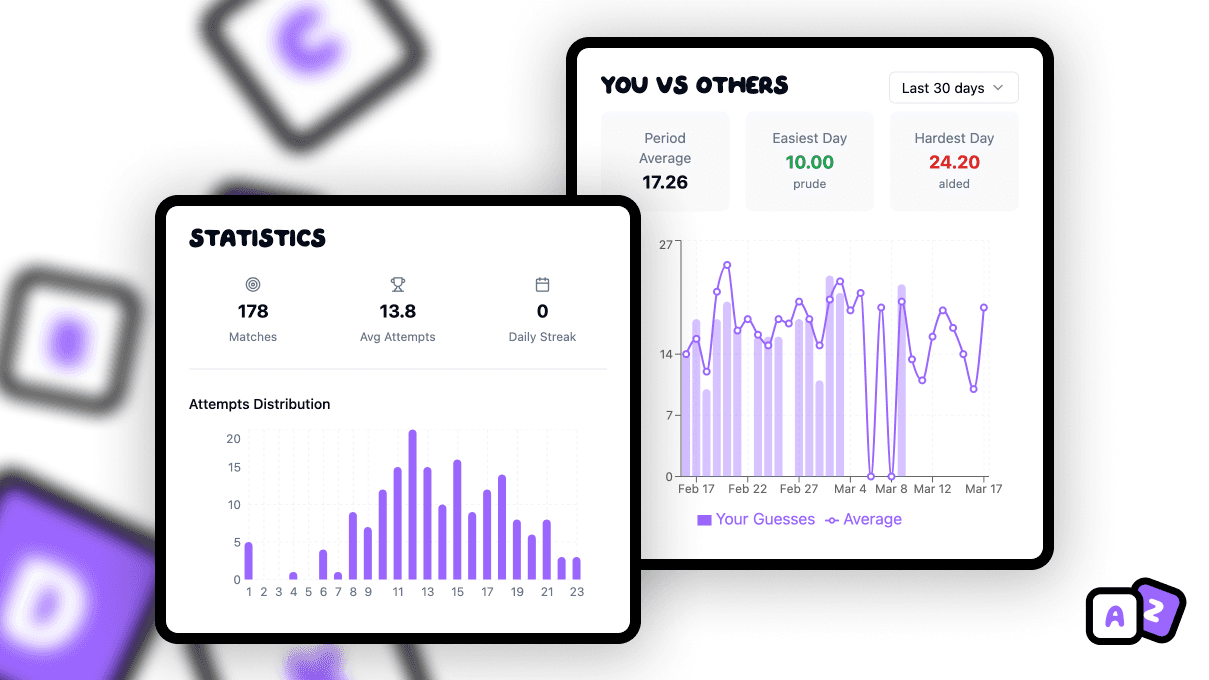
Numbers were modest but meaningful: 1,000+ matches played, 50+ registered users. The quality of engagement was the real signal: people came back daily and organically recruited others. LinkedIn drove the most traction; Twitter did nothing. Reddit was okay-ish but expensive.
The biggest takeaway wasn't about the game. It was about end-to-end ownership: making product decisions, breaking things, fixing them, and shipping without a team to catch your mistakes.